Featured Articles

Boost Your Website Traffic with High Quality DA/PA 40+ Backlinks
Apr 7, 2023

In today’s competitive world, one must be knowledgeable about the latest online bus...
Oct 12, 2018
December 28 2022 marks 100 years since the birth of the world’s most famous comic book writer: the late Stan Lee.
The 1960s were Stan Lee’s most astonishing decade, during which he came up with ideas and scripts for the first appearances of such heroes as the original X-Men, Iron Man, Thor, the Hulk, Black Panther, Daredevil and Doctor Strange.
This extraordinary purple patch elevates Lee as one of the architects of modern pop culture. The Marvel method of writing comics (where artists plot the story of a comic and the layout of the pages based on a collaborative approach between artist and scriptwriter) enabled him to script several hundred comics in the 1960s.
He wrote the dialogue for the first decade of titles featuring Spider-Man, the Hulk, the X-Men and many others.
Stanley Martin Lieber (who later changed his name to Stan Lee) was born to Jewish-Romanian immigrants in Manhattan. His father was a dress cutter and Lee had teenage jobs delivering sandwiches, as a theatre usher and an office boy, before his first writing jobs. These included advance obituaries for a news service and publicity material for the National Tuberculosis Centre.
In 1939, he found work at Timely – later renamed Atlas Comics, and eventually Marvel – as an editorial assistant, with his first writing credit on an early issue of Captain America in 1941. This issue saw the writer adopt his pen name and saw Cap throw his shield as a weapon for the first time – now a signature move for the hero.

Superheroes had been around since the 1930s, with DC Comics finding an early lead publishing Batman, Superman and Wonder Woman. But by the early 1960s the genre had stagnated.
At this time, sci-fi and horror anthologies were Marvel’s staples. For the final issue of one floundering Marvel anthology, Amazing (Adult) Fantasy, Lee and artist Steve Ditko invented a new character – Spider-Man. The character was “an instant success”, helping revive the superhero genre.
Superheroes in the 1960s
In 1960, DC hit on the idea of gathering their most popular heroes together to create the Justice League of America, following their earlier Justice Society. At Marvel, Lee had only just co-created such characters as the Hulk, Iron Man and Ant Man but within a year of their first appearances brought them together to form The Avengers.
These initiatives show that Lee was not only good at creating concepts that others could build on. He also had a savvy nose for marvellous ideas, copying what rival companies were doing and looking to new readerships.
He also remembered the company’s back catalogue. First he brought back Namor in 1962, then revived Captain America in 1964. He also reimagined 1930s characters Angel and Human Torch as members of the X-Men and Fantastic Four respectively.
Lee rose quickly from fill-in writer to editor-in-chief at Marvel, partially due to the exodus of Captain America creators Joe Simon and Jack Kirby to DC due to lack of profit sharing and, perhaps, being a cousin of the owner’s wife.
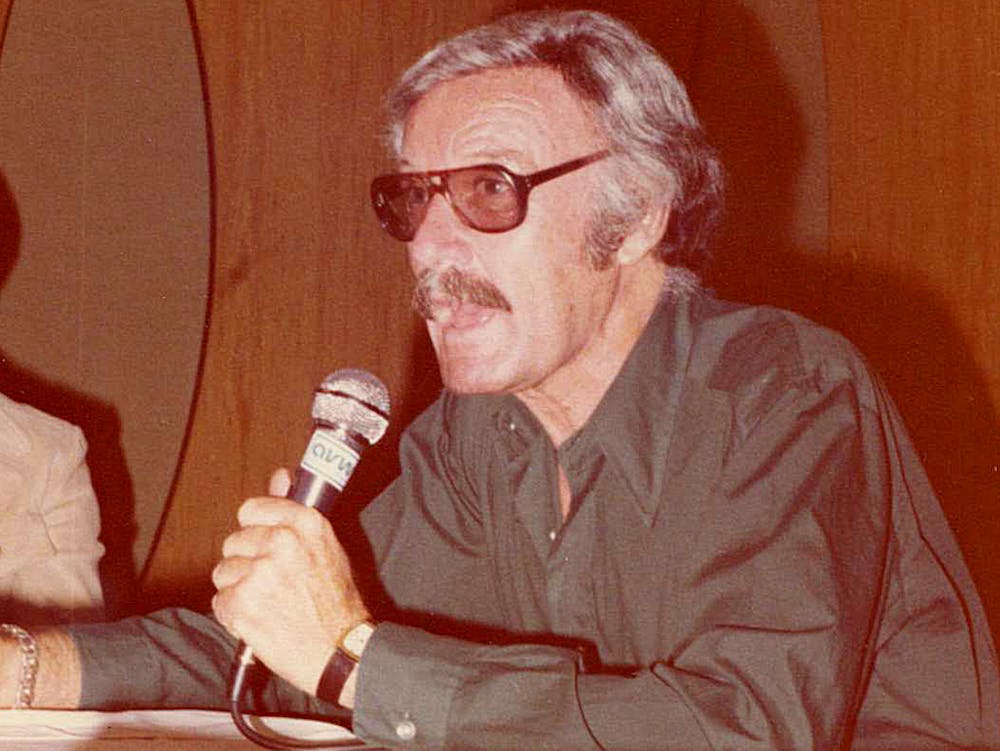
Lee enjoyed being the public face of Marvel, conducting Q&As about comics at colleges in the 1960s. He also added “Stan’s Soapbox” to hundreds of titles, a column which allowed to not only respond to reader letters, but also pursue an anti-racist agenda.
The public associated him with many of the characters he co-created because he also narrated Spider-Man And His Amazing Friends and The Incredible Hulk cartoons in the 1980s, as well as the Spider-Man video games in the 2000s.
More recently, cameos in nearly every Marvel adaptation between 2000 and 2018 made Lee the face of the film franchises.
Lee’s faith and multiculturalism
Despite being of Jewish descent, Lee showed little interest in faith but saw “world religion as a way into the storytelling process”.
While the Fantastic Four’s Thing was eventually revealed to be Jewish, it took four decades for this to be worked into storylines.

Lee’s fellow Jewish collaborator Jack Kirby, however, may have included iconography of the Golem (a mythical humanoid made of earth brought to life in Jewish folklore) into the character’s design and gave him a fictional Jewish neighbourhood as a home.
Although Lee didn’t bring his own background to his comics, he and Kirby wished to create the “first black superhero”, leading to the co-creation of Black Panther in 1966.
Interested in minority representation in the genre, Lee was also working on a TV adaptation of an LGBTQ+ superhero novel Hero in the 2000s, before that project was stymied by its gay writer’s passing in 2011.
One comic he co-created – X-Men – has resonated with LGBTQ+ readers. In an article for Syfy, author Sara Century wrote that with its 1980s run X-Men “implied queerness … and an analog to AIDS”.
Original Article Link to read more
Article source: https://article-realm.com/article/Computers/34244-100-years-of-Stan-Lee-how-the-comic-book-king-challenged-prejudice.html
Comments
Reviews

Most Recent Articles
- Oct 16, 2026 How Long Does It Take to Develop a BigCommerce Store in 2026? by Steve Jonas
- Oct 14, 2026 10 Reasons to Hire an eCommerce Developer from India in 2026 by Steve Jonas
- Oct 13, 2026 What should I check before I hire dedicated programmers for a custom software project? by Steve Jonas
- Oct 12, 2026 Must-Have Skills to Check Before Choosing a BigCommerce Development Partner by Steve Jonas
- Oct 6, 2026 Why Personalization Has Become Central to Customer Experience Strategies by Dipak Straits
Most Viewed Articles
- 4824 hits Activate www.youtube.com/activate on Roku and Kodi Platform by rokucomlinkhelp
- 3134 hits sling tv sound but no picture by elisabeth warner
- 2961 hits How To Setup Starz App and Hopster on Roku | starz.com/activate | Activate Starz App Guide 2019 by Roku Com Link Help
- 2898 hits Nekopoi by Nekopoi APK
- 2678 hits 2 Important Points to Consider When Hiring to a Family Photographer by William Smith
Popular Articles
In today’s competitive world, one must be knowledgeable about the latest online business that works effectively through seo services....
81582 Views

Walmart is being sued by a customer alleging racial discrimination. The customer who has filed a lawsuit against the retailer claims that it...
63963 Views
Are you caught in between seo companies introduced by a friend, researched by you, or advertised by a particular site? If that is...
37349 Views

Facebook, the best and most used social app in the world, has all the social features you need. However, one feature is missing. You cannot chat...
23631 Views
If you have an idea for a new product, you can start by performing a patent search. This will help you decide whether your idea could become the...
14887 Views

Moving becomes easy when you have the right moving accessories. These moving accessories help secure and protect your item by ensuring that no harm...
13259 Views

A lot of us look forward to the result of moving and not the process itself. It is pretty typical behavior, though. As modern people, many things...
13207 Views

Building a custom home is an exciting adventure. It’s your chance to bring your vision to life and create an area that sincerely displays...
12951 Views

Moving from one state, city, or even to a whole different county, is something that is either dictated by choice or circumstance. This is because,...
12075 Views

The report is titled as ‘Recombinant Cell Culture Supplements Market: Opportunity Analysis and Future Assessment 2022-2030’. An...
11716 Views
Statistics
| Members | |
|---|---|
| Members: | 17207 |
| Publishing | |
|---|---|
| Articles: | 79,782 |
| Categories: | 202 |
| Online | |
|---|---|
| Active Users: | 931 |
| Members: | 3 |
| Guests: | 928 |
| Bots: | 9174 |
| Visits last 24h (live): | 54956 |
| Visits last 24h (bots): | 57620 |

