Featured Articles

Boost Your Website Traffic with High Quality DA/PA 40+ Backlinks
Apr 7, 2023

In today’s competitive world, one must be knowledgeable about the latest online bus...
Oct 12, 2018

Description
According to the Market Statsville Group (MSG), the global smart ticketing market size was USD 13.8 billion in 2021 and is estimated to reach USD 41.1 billion by 2030, growing at a CAGR of 12.9% during the forecast period (2022-2030). Smart tickets, a substitute to traditional paper-based ticketing, gained traction in recent times, owing to the emphasis on digitizing ticketing processes. Smart tickets can save a traveler time by eliminating the need to stand in line to purchase a ticket.
Further, technology-wise, the companies in the market are increasingly involving the use of smartphones for smart ticketing purposes. For instance, in August 2019, Hitachi Rail, a prominent transportation company, announced the testing of smart ticketing technology. The technology involves sensors on trains that detect an app on passengers’ smartphones at the time of boarding. This technology eliminates the need for a paper ticket, bank cards, and smartcards, as it directly communicates with the app in smartphones. This smart ticketing technology is set to go under testing for Trenito Transport in Trento, Italy. Hitachi Rail expects to bring the technology to the United Kingdom for use on trams, buses, and trains.
Global Smart Ticketing Market Definition
Smart ticketing is unconventional to the traditional paper or cardboard ticket for public transport. The focus is on its use for railway, airways, and roadway services. Smart ticketing is a system that stores a ticket on a microchip and allows customers to have a seamless transportation and payment experience.
Request For Report Sample: https://www.marketstatsville.com/request-sample/smart-ticketing-market
Global Smart Ticketing Market Dynamics
Drivers: Growing Adoption of Modern Technology for Different Mode of Transportation Such as Railways and Roadways
The growth of traffic and population has created more demand for better transportation infrastructure in different modes of transportation, such as railways and roadways. New transportation technologies are emerging to meet these challenges.
NYC’s subway system -- the Metropolitan Transportation Authority (MTA), has recently started accepting contactless credit and debit cards. Such initiatives have contributed to the adoption of contactless payment technologies. For instance, In November 2019, The Uttar Pradesh Road Transport Corporation (UPSRTC) in India had planned to introduce ETMs (Electronic Ticketing Machines) on all the busses run within the state to help ease the delivery of transactions and handle all types of payment modes to buy tickets. The new system is expected to ensure the purchase of tickets either through debit and smart cards. The corporation is planning to introduce around 15,000 ETM machines by the end of 2020.
Restraints: High Initial Setup Costs and Operational Costs
Although the applications of smart ticketing are driving the demand for across the world, the high initial cost of setting up these systems is dissuading the enterprises (buyers) from investing in smart ticketing technology, thus leading to slow market penetration. The higher costs of smart ticketing systems are associated with significant and robust hardware and efficient software. That includes higher capital expenditure required to invest in technologies and hardware such as smart cards, wearables, readers, etc.
Moreover, products such as readers need periodic maintenance due to the need for fine adjustment and moving parts. The pressure lies on the end-user of that equipment, who faces maintenance costs throughout the product's lifetime. Furthermore, the cost of the readers is very high, owing to the added security. The interoperability costs add up to that to ensure that smart ticketing options are widely accepted everywhere. Addressing such concerns, compatible readers must be procured, which are usually priced higher. However, the interoperability has been very little between the various schemes implemented to date.
Request For Report Discount: https://www.marketstatsville.com/request-for-special-pricing/smart-ticketing-market
Scope of the Global Smart Ticketing Market
The study categorizes the smart ticketing market based on offerings and applications at the regional and global levels.
By Offerings Outlook (Sales, USD Billion, 2017-2030)
- Smart Cards
- Wearables
- Readers
- Other Offerings
By Application Outlook (Sales, USD Billion, 2017-2030)
- Transportation
- Railways
- Airways
- Roadways
- Sports and Entertainment
The smart cards segment is projected to account for the largest market share, by offerings
Based on offerings, the global smart ticketing market is divided into smart cards, wearables, readers, and other offerings. In 2021, smart cards accounted for the largest market share of 54.1% in the global smart ticketing market. Contactless and Contact smart cards are finding a significant adoption rate for successful transportation management, securing revenue, and employee security. Travelers use smart cards to effortlessly purchase fares for busses, trains, and other transportation with the swipe of the card. The smart card enables travelers to conveniently store and recharge value for prepaid metered parking without tokens or tickets.
Furthermore, features such as portability, flexibility, and convenience of having just one smart card that can hold a wide range of tickets, other transport products, and third-party services (such as local authority ‘city -card’ applications or some private-sector applications) have led to the city-based transport sectors across countries strongly embracing the technology over the past few years. For instance, in March 2020, the Uttar Pradesh Metro Rail Corporation made traveling free for Metro Go Smart Card Holders. This has been done to promote public commute and the greater use of services like Smart cards.
Asia Pacific accounts for the highest CAGR during the forecast period
Based on the regions, the global smart ticketing market has been segmented across North America, Asia-Pacific, Europe, South America, and the Middle East & Africa. Globally, Asia Pacific is estimated to hold the highest CAGR of 14.1% in the global smart ticketing market during the forecast period. The Asia-Pacific region emphasizes the deployment of advanced and interoperable automated fare collection (AFC) systems, such as smartcards and near field communication (NFC)-enabled devices, to increase transport systems' efficiency and ridership by giving commuters a smooth travel experience.
Report Analysis: https://www.marketstatsville.com/smart-ticketing-market
Countries in the region with upcoming smart ticketing systems are installing such systems to avoid additional costs later, and cities with legacy systems are further upgrading already existing AFC systems because of many of the latest offerings in the market, which are smart and cost-effective. Smart ticketing based on NFC technology is gaining prominence in the region. Several cities, such as Bangkok, Beijing, Hong Kong, Jakarta, Manila, Shanghai, Singapore, and Tokyo, use this technology, further helping the smart ticketing market to grow.
Key Market Players in the Global Smart Ticketing Market
Most companies in the market are focused on expanding operations across regions, augmenting their capabilities, and building strong partner relations. Major players in the global smart ticketing market are:
- Cubic Corporation
- Hid Global
- Infineon Technologies
- Confidex Ltd
- Thales Group
- Giesecke+Devrient
- Rambus Incorporated (Visa Inc.)
- Paragon ID (Paragon Group Limited)
- Softjourn, Inc
- Indra Sistemas
- NEC Electronics (NEC Corporation)
- Conduent Inc.
- Vix Technology
Article source: https://article-realm.com/article/Finance/23313-Smart-Ticketing-Market-is-estimated-to-reach-USD-41-1-Bn-by-2030.html
Comments
Reviews

Most Recent Articles
- Sep 24, 2026 Get Free Retirement Planning Advice and Build a Better Financial Future by MunafaWaala
- Sep 15, 2026 Get Free Mutual Fund Advisory: How to Choose Investments Based on Your Goals by MunafaWaala
- Jul 15, 2026 FIN Group Launches Reg Review: AI-Powered Compliance Platform for Investment Advisers, etc by Dinesh Kumar
- Jul 1, 2026 Why Should You Use a Financial Advisor for SIP Investment? by MunafaWaala
- Jun 29, 2026 Payroll Outsourcing Services Sydney: A Practical Guide for Growing Businesses by Mila james
Most Viewed Articles
- 23622 hits How to Download and Install Facebook Messenger on Firestick by Hope Mikaelson
- 14879 hits How to Start an Invention Idea by Edwin Poul
- 6652 hits Sleeping Pillow Market by Trisha Kumari
- 4470 hits How to use wholesale styrofoam Mannequin Head practice portrait lighting? by Liu Yudi
- 3996 hits Brief discussion about Water by kavin prasath
Popular Articles
In today’s competitive world, one must be knowledgeable about the latest online business that works effectively through seo services....
81569 Views

Walmart is being sued by a customer alleging racial discrimination. The customer who has filed a lawsuit against the retailer claims that it...
63866 Views
Are you caught in between seo companies introduced by a friend, researched by you, or advertised by a particular site? If that is...
37342 Views
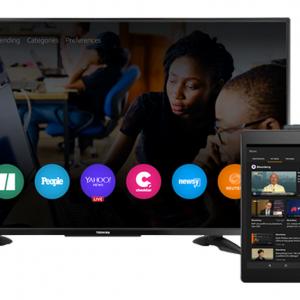
Facebook, the best and most used social app in the world, has all the social features you need. However, one feature is missing. You cannot chat...
23622 Views
If you have an idea for a new product, you can start by performing a patent search. This will help you decide whether your idea could become the...
14879 Views

Moving becomes easy when you have the right moving accessories. These moving accessories help secure and protect your item by ensuring that no harm...
13254 Views

A lot of us look forward to the result of moving and not the process itself. It is pretty typical behavior, though. As modern people, many things...
13198 Views

Building a custom home is an exciting adventure. It’s your chance to bring your vision to life and create an area that sincerely displays...
12944 Views

Moving from one state, city, or even to a whole different county, is something that is either dictated by choice or circumstance. This is because,...
12067 Views

The report is titled as ‘Recombinant Cell Culture Supplements Market: Opportunity Analysis and Future Assessment 2022-2030’. An...
11569 Views
Statistics
| Members | |
|---|---|
| Members: | 17198 |
| Publishing | |
|---|---|
| Articles: | 79,778 |
| Categories: | 202 |
| Online | |
|---|---|
| Active Users: | 1492 |
| Members: | 4 |
| Guests: | 1488 |
| Bots: | 10847 |
| Visits last 24h (live): | 4635 |
| Visits last 24h (bots): | 31364 |
