Featured Articles

Boost Your Website Traffic with High Quality DA/PA 40+ Backlinks
Apr 7, 2023

In today’s competitive world, one must be knowledgeable about the latest online bus...
Oct 12, 2018
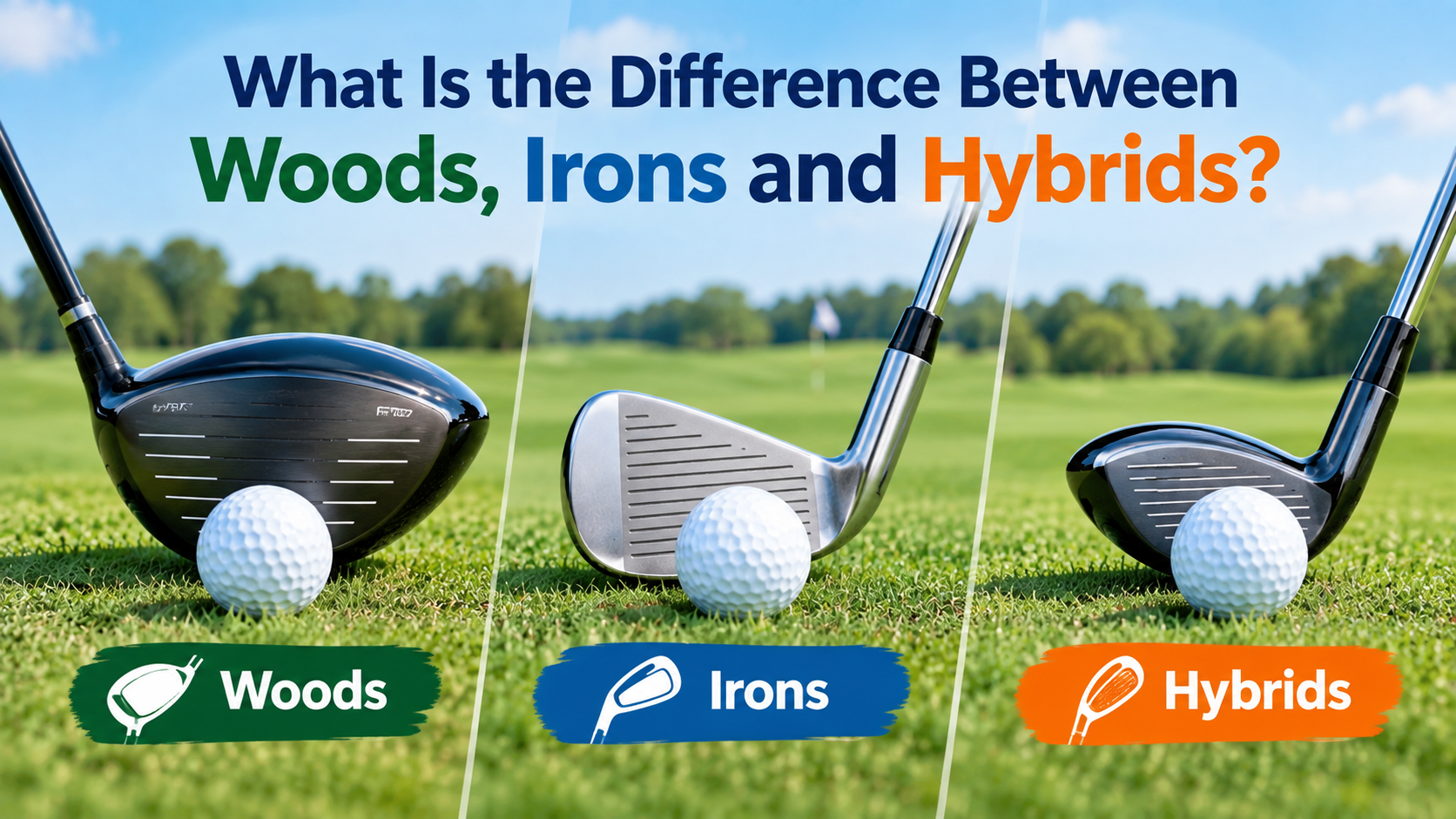
Walk into any golf shop and you will see a wall of clubs that all look slightly different. Some have big, round heads. Some look like thin metal blades. Others seem to sit somewhere in the middle, like a wood and an iron had a child. If you are new to the game, the different types of golf stick on display can feel confusing at first.
If you have ever stood over the ball wondering which one to pull, you are not alone. Even golfers with a few years of experience mix them up. This guide breaks down what woods, irons and hybrids actually do, how they differ, and how to build a bag that helps you score better.
What Are Woods in Golf?
Woods are the longest clubs in your bag, and their job is simple: hit the ball far. They have large, hollow heads and long shafts, which create high clubhead speed. Despite the name, modern woods are made of titanium, steel or composite materials, not timber. You will use them mostly on par 4s and par 5s when you need serious distance.
Drivers: The Big Stick
The driver is the biggest and longest club you carry, usually about 45 inches. It is built to launch the ball off a tee at high speed. Most golfers reach for it on long holes, and it is also the hardest club to control.
Fairway Woods
Fairway woods, like the 3 wood and 5 wood, have smaller heads and more loft than a driver. You can hit them from the tee or off the grass. Picture a par 5 where you want to reach the green in two. A 3 wood is your friend.
What Are Irons in Golf?
Irons are the workhorses of the game. They have flat, compact clubfaces and shorter shafts, so you get more control and a steeper landing angle. Most sets run from a 3 or 4 iron up to a pitching wedge. You will hit irons into greens, from tight lies, and any time precision matters more than raw distance.
Long, Mid and Short Irons
Long irons (3 to 5) fly lower and go farther. Mid irons (6 to 8) balance distance and control. Short irons (9 and pitching wedge) launch high and stop quickly. A 7 iron is often the club golfers practice with first.
Wedges: The Scoring Clubs
Wedges are technically irons, just with much more loft. Pitching, gap, sand and lob wedges help you hit delicate shots around the green. If you have ever chipped over a bunker to a tight pin, you already know how valuable they are.
What Are Hybrids in Golf?
Hybrids are the newest addition to most golfers' bags, and honestly, they might be the friendliest club ever designed. They combine the rounded head of a fairway wood with the shorter shaft and lower launch of an iron. Their main purpose is to replace long irons, which many players find frustrating to hit consistently.
Why Hybrids Were Invented
Long irons demand fast swing speed and clean contact. Many amateur golfers just cannot deliver that every time. Manufacturers created hybrids to fix that problem by lowering the center of gravity, which helps the ball get airborne with less effort.
Who Benefits Most from Hybrids
Beginners, seniors and mid handicappers get the biggest boost. Think of a golfer who keeps dragging a 4 iron along the ground. Swap it for a 4 hybrid, and suddenly the ball climbs into the air and lands softly. That is the magic.
Key Differences Between Woods, Irons and Hybrids
Put the three side by side and the differences become clear. They vary in head size, shaft length, loft, and how forgiving they feel on off-center hits. Understanding these points helps you pick the right club for the right shot instead of guessing and hoping. Here is a quick comparison before we dig deeper.
|
Feature |
Woods |
Irons |
Hybrids |
|
Head shape |
Large, rounded |
Small, flat |
Medium, rounded |
|
Shaft length |
Longest |
Shortest |
In between |
|
Main goal |
Maximum distance |
Accuracy and control |
Ease and forgiveness |
|
Best used |
Tee and fairway |
Approach shots |
Long irons replacement |
Design and Clubhead Shape
Woods have big, hollow heads that hold more weight around the edges. Irons have thinner, blade-like or cavity-back heads. Hybrids look like a small wood. That shape difference changes how each club glides through the turf and launches the ball.
Distance and Trajectory
Woods travel the farthest with a mid to high flight. Irons fly higher with steeper descent as the numbers go up. Hybrids produce a mid-high flight that carries well and rolls out a bit, often matching the distance of the iron they replace.
Forgiveness and Playability
Forgiveness means how well a club handles mishits. Hybrids are the most forgiving of the bunch, followed by game-improvement irons and cavity-back designs. Drivers can be forgiving too, but a bad swing with a driver still gets punished with a slice or hook.
When to Use Each Club on the Course?
Knowing what each club does is one thing. Knowing when to pull it is where scores drop. A smart golfer thinks about lie, distance, hazards and confidence before choosing. Sometimes the longest club is not the best play. Let us walk through common situations you will face in a typical round.
Off the Tee
On wide-open par 4s and 5s, grab the driver. On a tight hole with trouble left and right, a 3 wood or hybrid off the tee keeps you in play. Many pros choose accuracy over distance on narrow layouts.
From the Fairway
If you have 200 yards to the green, a fairway wood or hybrid usually beats a long iron. From 150 yards, a mid iron is the classic choice. Trust the club that gives you the most consistent contact.
From the Rough
Hybrids are excellent out of thick grass. Their rounded soles cut through better than iron blades, which tend to get tangled. Picture a ball sitting down in light rough at 180 yards. A hybrid can rescue that shot.
How to Choose the Right Mix for Your Bag?
You are allowed 14 clubs, and how you fill those slots matters. There is no perfect formula, but your swing speed, handicap and course type should guide you. A good bag fills distance gaps without duplicating clubs. Try this simple approach to build yours.
Start with a driver you can control, not just the one with the biggest reputation.
Add a 3 wood or 5 wood for long fairway shots.
Replace your 3, 4 and maybe 5 iron with hybrids.
Keep a full iron set from 6 to pitching wedge.
Finish with two to four wedges based on your short game.
For Beginners
Keep it simple. A driver, one fairway wood, two hybrids, irons from 6 to 9, a pitching wedge, a sand wedge and a putter is plenty. Forgiveness matters more than anything at this stage.
For Mid Handicappers
You probably hit your irons decently but struggle with long approaches. Swapping out the 3 and 4 irons for hybrids can fix that. Add a gap wedge to fill the distance hole between your pitching and sand wedge.
For Low Handicappers
Better players often keep a driving iron or a 2 hybrid for windy days and tight tee shots. They shape shots on purpose, so they choose clubs for feel and workability, not just forgiveness.
Common Mistakes Golfers Make with Woods, Irons and Hybrids
Even good golfers slip up here. Most mistakes come from ego or habit rather than bad technique. A friend of mine carried a 3 iron for two years, hit it maybe twice a round, and blamed himself every time. The club was the problem, not his swing. Watch out for these traps.
Carrying long irons you cannot hit consistently.
Using a driver on every par 4 regardless of the hazards.
Buying clubs based on a pro's setup instead of your own swing speed.
Leaving big distance gaps between clubs.
Ignoring loft numbers and only counting the club number.
Conclusion
Woods, irons and hybrids are not rivals. They are teammates, each built for a specific job. Woods chase distance, irons deliver control, and hybrids bridge the gap with forgiveness. Once you understand what each one does, choosing the right club stops feeling like a coin flip.
Take a look at your bag this weekend. If a long iron is collecting dust or causing headaches, try a hybrid on the range. Build a set that fits your swing, not someone else's, and you will enjoy the game a lot more.
Frequently Asked Questions
1. What is the main difference between woods, irons and hybrids?
Woods are built for maximum distance, irons for accuracy and control, and hybrids for easy, forgiving shots that replace long irons. The main differences come down to head shape, shaft length, loft and how each club launches the ball.
2. Are hybrids easier to hit than irons?
Yes, for most golfers. Hybrids have a lower center of gravity and a wider sole, which helps the ball launch higher with less effort. They work especially well for beginners, seniors and anyone who struggles with long irons.
3. Should I replace my long irons with hybrids?
If your 3, 4 or 5 iron feels hard to hit or inconsistent, replacing them with hybrids is a smart move. Many golfers of all levels do this. Test them on a launch monitor or at the range first.
4. Can hybrids go as far as fairway woods?
Usually not. Hybrids are shorter than fairway woods and are designed to match the distance of the irons they replace. A 3 hybrid typically flies about as far as a 3 iron, while a 3 wood goes noticeably farther.
5. How many woods, irons and hybrids should be in my golf bag?
There is no fixed rule, but a common setup is a driver, one or two fairway woods, two or three hybrids, irons from 6 to pitching wedge, and two or three wedges plus a putter. Adjust based on your swing speed and needs.
6. Are woods made of wood?
No. The name is a leftover from the old days when clubheads were carved from persimmon. Modern woods use titanium, steel and composite materials, which are lighter, stronger and more forgiving.
7. Which club is best for beginners?
Beginners usually do best with hybrids, a high-lofted fairway wood and a game-improvement iron set. These clubs are forgiving and help build confidence quickly while you develop your swing.
Article source: https://article-realm.com/article/Sports-Recreation/Golf/85230-What-Is-the-Difference-Between-Woods-Irons-and-Hybrids.html
URL
https://parteeof18.com/blog/types-of-golf-clubs/Woods, irons and hybrids each serve a different job on the course. Learn how they differ in distance, forgiveness and use, and which ones belong in your bag.
Comments
Reviews

Most Recent Articles
- Oct 21, 2026 The Best Golf Betting Game For Exactly 3 Players by ParTee Of18
- Oct 8, 2026 Top Free Tools for Calculating Your Golf Handicap by ParTee Of18
- Sep 23, 2026 Phil Mickelson's Most Memorable Hole in One Golf Moments in History by ParTee Of18
- Sep 15, 2026 5 Smart Strategies for Winning a Shamble Golf Event by ParTee Of18
- Sep 8, 2026 The History Behind Golf's Most Prestigious Tournaments by ParTee Of18
Most Viewed Articles
- 932 hits Tiger Shipping Containers by Mark Mathews
- 868 hits Chandrababu Naidu’s Implementation of Welfare Programmes by joseph
- 868 hits How Can You Follow The Latest Ethiopian News Anywhere? by Ezega
- 647 hits 6 Important Things To Know Before Initiating MPPSC Exam Preparation by neha jain
- 613 hits What are the advantages of CNC turning and milling processing? by cncmachiningptj
Popular Articles
In today’s competitive world, one must be knowledgeable about the latest online business that works effectively through seo services....
81583 Views

Walmart is being sued by a customer alleging racial discrimination. The customer who has filed a lawsuit against the retailer claims that it...
63981 Views
Are you caught in between seo companies introduced by a friend, researched by you, or advertised by a particular site? If that is...
37350 Views

Facebook, the best and most used social app in the world, has all the social features you need. However, one feature is missing. You cannot chat...
23631 Views
If you have an idea for a new product, you can start by performing a patent search. This will help you decide whether your idea could become the...
14887 Views

Moving becomes easy when you have the right moving accessories. These moving accessories help secure and protect your item by ensuring that no harm...
13259 Views

A lot of us look forward to the result of moving and not the process itself. It is pretty typical behavior, though. As modern people, many things...
13208 Views

Building a custom home is an exciting adventure. It’s your chance to bring your vision to life and create an area that sincerely displays...
12952 Views

Moving from one state, city, or even to a whole different county, is something that is either dictated by choice or circumstance. This is because,...
12076 Views

The report is titled as ‘Recombinant Cell Culture Supplements Market: Opportunity Analysis and Future Assessment 2022-2030’. An...
11752 Views
Statistics
| Members | |
|---|---|
| Members: | 17207 |
| Publishing | |
|---|---|
| Articles: | 79,797 |
| Categories: | 202 |
| Online | |
|---|---|
| Active Users: | 638 |
| Members: | 8 |
| Guests: | 630 |
| Bots: | 10884 |
| Visits last 24h (live): | 3948 |
| Visits last 24h (bots): | 71516 |


