Featured Articles

In today’s competitive world, one must be knowledgeable about the latest online bus...
Oct 12, 2018
Oil Country Tubular Goods (OCTG) and line pipe are both essential components in the oil and gas industry, playing distinct roles in the exploration, production, and transportation of hydrocarbons. Understanding the differences between OCTG and line pipe is crucial for stakeholders in the energy sector, including operators, engineers, procurement professionals, and investors.
1.OCTG
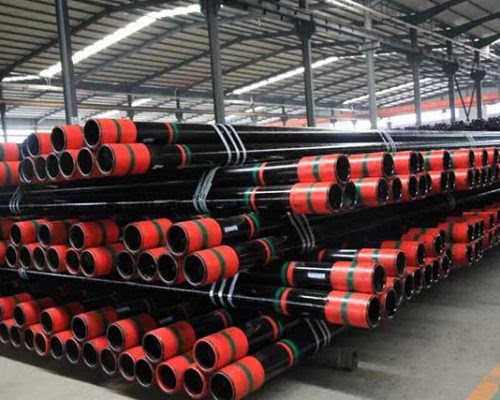
OCTG refers to a group of seamless and welded steel tubes or pipes designed for use in oil and gas well operations, including drilling, completion, and production activities. The primary types of OCTG products include casing, tubing, and drill pipes, each serving specific functions in the lifecycle of an oil or gas well.
(1)Casing
Casing pipes are installed inside the drilled wellbore to support the walls and prevent the formation from collapsing. They also provide a conduit for the extraction of oil or gas to the surface. Casing is available in various grades and sizes to accommodate different well depths, pressure levels, and downhole conditions.
(2)Tubing
Tubing is used to transport oil or gas from the producing formation to the surface. It is placed inside the casing and is subjected to internal and external pressure, as well as corrosive elements present in the well fluid.
(3)Drill Pipes
Drill pipes are heavy-duty seamless tubes used to rotate the drill bit and pump drilling fluids (mud) during the drilling process. They must withstand significant torsional and compressive forces while maintaining integrity under challenging downhole conditions.
OCTG products are subject to stringent technical specifications, material requirements, and quality control standards to ensure reliable performance in demanding downhole environments. These products are exposed to extreme pressures, temperatures, corrosive fluids, and mechanical stresses, making their design and manufacturing critical for well integrity and operational safety.
2.Line Pipe
Line pipe, also known as pipeline steel or transmission pipe, serves as the conduit for transporting oil, natural gas, and other hydrocarbons from production facilities to refineries, distribution hubs, and end-users. Unlike OCTG, which operates within the confines of a wellbore, line pipe is employed in the construction of long-distance pipelines that traverse varied terrains and climates.
3. OCTG vs Line Pipe
(1)Strength and Durability
Line pipe must exhibit high tensile strength, impact resistance, and toughness to withstand external loads, ground movement, and environmental stressors over extended distances.
(2)Weldability
Due to the extensive lengths of transmission pipelines, line pipe materials must be conducive to efficient and reliable welding processes, ensuring secure and durable connections between pipe segments.
(3)Corrosion Resistance
Line pipe is often exposed to diverse environmental conditions, including soil moisture, atmospheric elements, and chemical interactions, necessitating effective corrosion protection measures to prolong service life.
(4)Regulatory Compliance
Line pipe products must adhere to industry and government standards, such as API 5L (American Petroleum Institute) specifications, to ensure quality, safety, and environmental responsibility.
In summary, while both OCTG and line pipe are integral to the oil and gas industry, they serve distinct operational purposes. OCTG facilitates the drilling and production of oil and gas wells, providing structural support, fluid transport, and drilling capabilities within the wellbore. On the other hand, line pipe forms the backbone of transmission systems, enabling the safe, efficient, and reliable transportation of hydrocarbons over vast distances, connecting production centers with processing facilities and consumer markets. Understanding the unique roles, technical requirements, and performance expectations of OCTG and line pipe is essential for effectively managing exploration, production, and transportation activities in the dynamic energy landscape.
Article source: https://article-realm.com/article/Business/58075-Difference-between-OCTG-and-Line-Pipe.html
Comments
Reviews

Most Recent Articles
- Nov 5, 2026 Gulf States Rewire Government Business And Daily Life Through Code by Kevin william
- Nov 5, 2026 Revenue Cycle Management Market Size, Share, Latest Trends and Forecast 2026-2034 by Tim Wood
- Nov 5, 2026 Helicopter Simulator Market Size, Share, Latest Insights and Forecast 2026-2034 by Tim Wood
- Nov 5, 2026 Rust Removal Methods for Seamless Square Tubes by Jane Tian
- Nov 5, 2026 Welding Rod Selection by Seamless Steel Pipe Material by Jane Tian
Most Viewed Articles
- 10707 hits Market Overview: Membrane Contactor Industry 2025 by Terra Logistics
- 8611 hits Mist Sprayer Pumps Market Demands, Trends, Industry Analysis, Segmentation by 2032 by ellamrfr
- 6817 hits Next-Gen Connectivity and the Rising Demand for RF Semiconductors by James Cameroon
- 5722 hits Digital Printing Packaging Market by Technology, Application, and Region by James Cameroon
- 4759 hits Flexographic Printing Plates Market Size, Share, Report 2024-32 by ellyse perry
Popular Articles
In today’s competitive world, one must be knowledgeable about the latest online business that works effectively through seo services....
81675 Views

Walmart is being sued by a customer alleging racial discrimination. The customer who has filed a lawsuit against the retailer claims that it...
64119 Views
Are you caught in between seo companies introduced by a friend, researched by you, or advertised by a particular site? If that is...
37408 Views

Facebook, the best and most used social app in the world, has all the social features you need. However, one feature is missing. You cannot chat...
23686 Views
If you have an idea for a new product, you can start by performing a patent search. This will help you decide whether your idea could become the...
14954 Views

Moving becomes easy when you have the right moving accessories. These moving accessories help secure and protect your item by ensuring that no harm...
13313 Views

A lot of us look forward to the result of moving and not the process itself. It is pretty typical behavior, though. As modern people, many things...
13281 Views

Building a custom home is an exciting adventure. It’s your chance to bring your vision to life and create an area that sincerely displays...
13036 Views

Moving from one state, city, or even to a whole different county, is something that is either dictated by choice or circumstance. This is because,...
12127 Views

The report is titled as ‘Recombinant Cell Culture Supplements Market: Opportunity Analysis and Future Assessment 2022-2030’. An...
11920 Views
Statistics
| Members | |
|---|---|
| Members: | 17271 |
| Publishing | |
|---|---|
| Articles: | 79,985 |
| Categories: | 202 |
| Online | |
|---|---|
| Active Users: | 611 |
| Members: | 0 |
| Guests: | 611 |
| Bots: | 12569 |
| Visits last 24h (live): | 3682 |
| Visits last 24h (bots): | 69318 |


