Featured Articles

In today’s competitive world, one must be knowledgeable about the latest online bus...
Oct 12, 2018
In recent years, with the changes in human environment and diseases, the incidence of fungal infections has been increasing year by year. Candida albicans is one of the important pathogens causing fungal infections. In addition, it is also an important food-borne pathogen.
Therefore, it is of great significance to carry out research on detection methods of Candida albicans in the fields of medical clinical testing and food safety testing.
Biological characteristics of Candida Albicans
Candida albicans exists widely in nature, and also exists in the oral cavity, upper respiratory tract, intestinal tract and vagina of normal people. It is generally small in number in normal organisms, does not cause disease, and is conditionally pathogenic. When the body’s resistance is reduced or the flora is out of balance, Candida albicans will multiply and change its growth form to invade human cells and cause diseases.
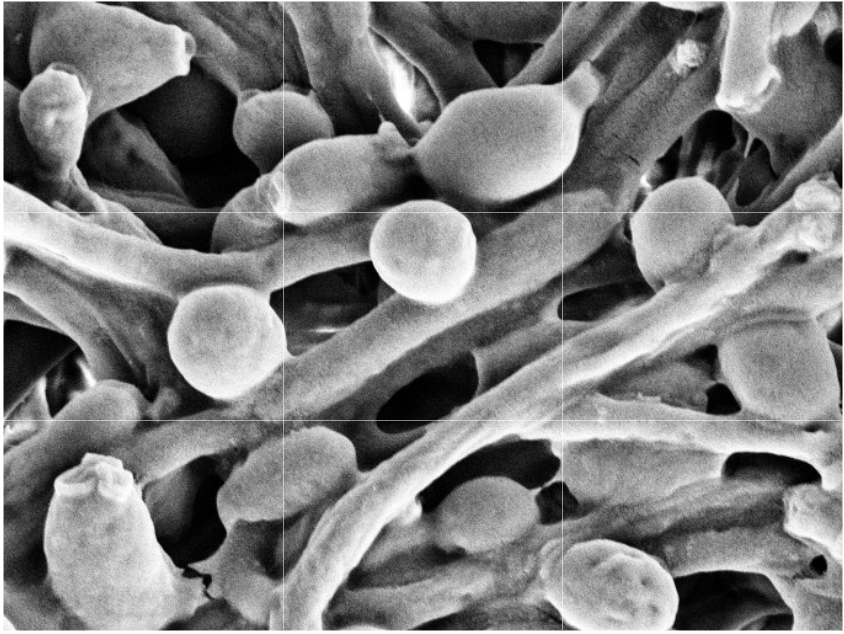
Figure 1. Candida albicans visualized using scanning electron microscopy.
The cells of Candida albicans were oval, and the cells of pathogenic strains showed pseudohyphae. The bacterium was incubated on blood agar or Sabouraud agar at 37°C or room temperature for 2 to 3 days to form gray-white cheese-like colonies. Microscopic examination of the smear showed oval blastocyte on the surface and many pseudohypha on the bottom layer. If inoculated on 4% maize agar and incubated at room temperature for 3-5 days, pseudohyphae, blastospores and chlamyspores can be seen. Candida albicans does not have strong resistance to heat, and it will die after 1 hour when heated to 60°C. But it is more resistant to drying, sunlight, ultraviolet rays and chemical agents.
Pathogenicity of Candida Albicans
Candida albicans causes superficial infection and deep infection. Related diseases caused by this species include skin candidiasis, including erosion between fingers (toes), which is more common in people who have been engaged in wet work for a long time. Candidal interacancerous rash is more common in Pediatric and obese hyperhidrosis, papular candidiasis more common in obese children, candidal paronychia, nail bed inflammation more common on the nails; mucosal candidiasis, including thrush more common in infants and young children, and genital candidiasis diseases; deep infection diseases include visceral candidiasis, which can affect all internal organs of the body, among which intestinal candidiasis and pulmonary candidiasis are more common. In addition, it can cause urethritis, nephritis, endocarditis and meningitis, and occasionally it can cause candida sepsis. Candida eruption, that is, skin allergy caused by Candida and its metabolites, the main damage is groups of sterile blisters, which are mostly seen between the fingers; psoriasiform, pityriasis rosea, seborrheic dermatitis,urticaria-like, centrifugal erythema annulare-like lesions can also be seen.
Factors Contributing to Candida Infection
Candidiasis is mainly acute, subacute or chronic infection caused by Candida albicans, and is the most common fungal disease. The clinical symptoms are complex and vary in severity, and children are mostly acute secondary infections. The disease often invades the skin and mucous membranes, and can also cause visceral or systemic infections. All visceral infections are often secondary to a variety of chronic wasting diseases, and there are predisposing factors such as long-term use of broad-spectrum antibiotics, corticosteroids, chemotherapy, and radiotherapy. In recent years, with the application of large doses of antibiotics, hormones, immunosuppressants, and the development of organ transplantation, its incidence has gradually increased, and it can be life-threatening and cause serious consequences. In addition to the yeast type causing superficial infections, so-called pseudomycelium is another morphological manifestation of yeast-like fungi. Germ tube and pseudomycelium production mainly occurs in patients with invasive infection. In addition, yeasts of the genus Candida are able to produce and secrete enzymes that allow facultative pathogenic microorganisms to penetrate vascular and mucosal barriers. Various bacteria of the genus Candida are generally transmitted through the pollution of dirt, and the main entrance is the nasopharyngeal passage, but fatty acids, acidic pH and hostile flora can also cause dysfunction of the skin surface to inhibit fungal infection, resulting in Superficial candidiasis. Invasive candidiasis spreads outward from the gastrointestinal tract after the bacteria infect the mucous membranes.
Candida Albicans Detection Method
Fungal testing methods include direct smear microscopy, fungal culture identification, fungal drug susceptibility testing, fungal infection tissue biopsy, fungal immunological tests, and molecular biology testing. Each method has its own advantages and disadvantages. direct microscopic examination is fast, direct, and low-cost, but the detection rate is low, which can no longer meet the clinical needs. Biopsy is very helpful for diagnosis, but this The method requires high technical level of clinicians and cannot be promoted in primary hospitals; although fungal culture is a diagnostic test for deep fungal infection, the positive rate of culture of this method is low, and in patients with disseminated candidiasis with negative blood culture It can be as high as 50%, so the diagnosis should be combined with the results of smear microscopy, tissue biopsy, serology and molecular biology tests; serological tests, such as 3-β-D glucan test (G test) and galactomannan test (GH test) are a new test technology developed in recent years and have been rapidly applied. The detection sensitivity and specificity are above 80%, so it becomes a supplementary inspection method for the diagnosis of Candida albicans; molecular biological testing is the most rapidly developed testing method in recent years, and some studies have used peptide nucleic acid fluorescence in situ hybridization ( PNA-FISH) has a sensitivity and specificity of 99%-100% and 100% for the detection of Candida albicans and/or Candida glabrata positive in blood culture, but due to various reasons such as cost, this method cannot be carried out vigorously. Therefore, fungal detection technology with lower cost and higher accuracy is urgently needed in the market and needs to be developed.
Article source: https://article-realm.com/article/Health-Fitness/Medicine/45703-What-is-Candida-Albicans-Infection.html
Comments
Reviews

Most Recent Articles
- Oct 9, 2026 How to Take HCQS 200 mg Safely: Dosage & Tips by Grayluca
- Sep 8, 2026 United States Pharmaceuticals Market: Size, Trends, Growth, and Strategic Outlook by Coherent MI
- Jun 30, 2026 Why Choosing the Right Eye Specialist for Children in Kolkata Matters by Alzbeta Berka
- May 20, 2026 ABA Billing Companies | Top ABA Billing & Revenue Cycle Experts by julyjack
- May 18, 2026 Global Orthodontic Headgear Market Analysis, Trends, Report, 2034 by Dipak Straits
Most Viewed Articles
- 7593 hits What You Need to Know About the Prostate Gland and Its Symptoms by Brentconroy
- 639 hits Discover The Best Professional Fitness Coach In Newcastle And Wollongong by Thegorilla Pit
- 590 hits Comprehensive Review of Designs for Health Supplements: Berberine-Evail, GI Revive, and ArthroSoothe by Ella Smith
- 577 hits Should I Choose Physiotherapy Over Other Treatment Options by Tom Cartwright
- 566 hits For what reason would it be advisable for me I be utilizing Whey Protein by dhamisingh
Popular Articles
In today’s competitive world, one must be knowledgeable about the latest online business that works effectively through seo services....
81611 Views

Walmart is being sued by a customer alleging racial discrimination. The customer who has filed a lawsuit against the retailer claims that it...
64078 Views
Are you caught in between seo companies introduced by a friend, researched by you, or advertised by a particular site? If that is...
37367 Views

Facebook, the best and most used social app in the world, has all the social features you need. However, one feature is missing. You cannot chat...
23649 Views
If you have an idea for a new product, you can start by performing a patent search. This will help you decide whether your idea could become the...
14907 Views

Moving becomes easy when you have the right moving accessories. These moving accessories help secure and protect your item by ensuring that no harm...
13275 Views

A lot of us look forward to the result of moving and not the process itself. It is pretty typical behavior, though. As modern people, many things...
13234 Views

Building a custom home is an exciting adventure. It’s your chance to bring your vision to life and create an area that sincerely displays...
12971 Views

Moving from one state, city, or even to a whole different county, is something that is either dictated by choice or circumstance. This is because,...
12093 Views

The report is titled as ‘Recombinant Cell Culture Supplements Market: Opportunity Analysis and Future Assessment 2022-2030’. An...
11876 Views
Statistics
| Members | |
|---|---|
| Members: | 17231 |
| Publishing | |
|---|---|
| Articles: | 79,856 |
| Categories: | 202 |
| Online | |
|---|---|
| Active Users: | 2654 |
| Members: | 12 |
| Guests: | 2642 |
| Bots: | 24590 |
| Visits last 24h (live): | 5724 |
| Visits last 24h (bots): | 62473 |